
March Madness Lessons, Hidden Workforce Risk, Aging-Friendly Design & More
March Madness is a reminder that peak performance does not happen by accident. The teams still standing this time of year did not get there in a single great game. They got there through practice, consistency, and good habits repeated over time.
There are a few parallels worth calling out:
- Practice beats talent alone. The best teams rehearse fundamentals until they become automatic.
- Persistence matters. Every tournament includes setbacks, adjustments, and close calls.
- Good habits compound. Small, repeatable behaviors add up to big outcomes over a season.
- Accountability improves performance. Teams do not train in isolation. They practice together, review together, and push one another to improve.
March is also about brackets, friendly competition, and shared moments of fun. Even the most "perfect" bracket is rarely built on instinct alone. It reflects patterns, probabilities, and insights gathered over time, often compared and debated with others.
Hibiscus POV: Well-being works much the same way. Sustainable health changes rarely happen alone. People are more likely to build and stick with better habits when they do so alongside coworkers, family members, or a trusted coach. Community and relationships matter. Hibiscus supports this by pairing personal insight with human guidance, so progress feels shared, supported, and achievable rather than isolating.
Employer Insights
The Risk Below the Iceberg: Why "Apparently Healthy" Can Be Misleading
A recent WorldatWork article on the "apparently healthy" workforce highlights a common employer blind spot. Early in the year, many organizations see relatively low claims activity, which can create a false sense of reassurance.
Much of the health risk lives below the surface. Cardiometabolic risk often develops quietly, without symptoms, and without triggering claims until something more serious occurs. Low claims in Q1 do not mean low risk. They often mean risk that has not yet been identified.
This is the iceberg problem. What is visible looks manageable, while the larger issue remains hidden underneath.
Hibiscus POV: This is the difference between reactive and proactive health strategies. Reactive approaches wait for claims, diagnoses, or events to signal a problem. Proactive approaches surface risk earlier, when there is still time to intervene thoughtfully. Hibiscus face screening helps employers identify underlying risk in people who feel fine today, allowing action before cost, disruption, and disease escalate.
Product Update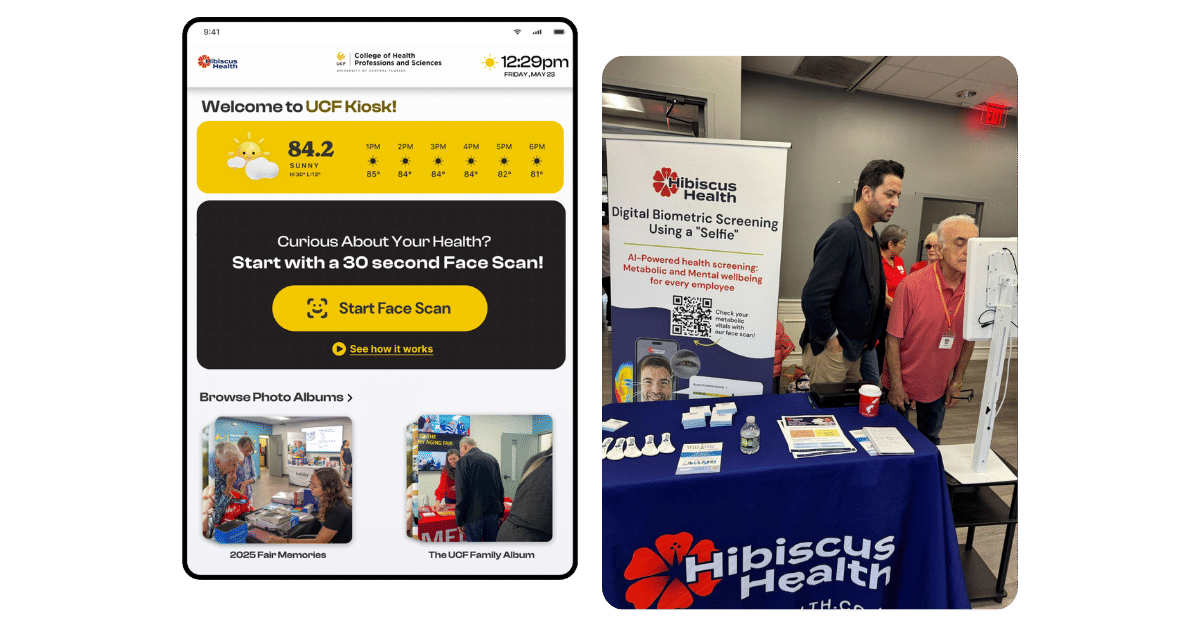
Aging-Friendly Design That Supports Caregivers and Extended Populations
Hibiscus has continued to evolve its screening experience to be more accessible for older adults, with clearer visuals, simpler workflows, and an intuitive kiosk design. The product development process included increasing font sizes, enabling streamlined CTAs, and providing more user guidance.
While post-65 covered lives may represent a smaller segment, employers increasingly recognize the value of supporting early retirees, those still on plan, and the significant number of employees serving as caregivers for aging parents or loved ones. Designing for older adults makes the experience better for everyone and extends the value of Hibiscus beyond the core employee population.
On March 6, Hibiscus participated in a Healthy Aging Fair, where more than 300 seniors and representatives from organizations that support older adults experienced the Hibiscus Healthy Selfie™ face scan firsthand.
Why this matters for employers:
- Caregiver relevance: Employees caring for aging parents often experience higher stress, increased health utilization, and productivity impact. Tools that help caregivers identify and address risk earlier support both the employee and their family.
- Retiree and extended coverage: For employers with retirees still on plan, aging-friendly screening offers a scalable way to surface risk before costly events occur.
- Better usability for all: Improvements made for older adults improve clarity, trust, and engagement across every age group.
Hibiscus POV: Proactive health strategies do not stop at the employee badge. By designing with caregivers, retirees, and older adults in mind, Hibiscus helps employers extend preventive insight to the populations that often drive downstream cost and complexity, without adding friction to the benefits experience.
Milestones & Recognition
Law Firm Wellness Leadership Panel — Tampa
Hibiscus CEO Kavi Misri joined CCO Kate McAllister and Benefits Advisor Joe Malzacher on a panel at the Employee Wellness Summit for Legal Professionals in Tampa on March 4. The discussion explored how employers can best support high-performing, time-constrained workforces like those in the legal profession, where long hours, high stress, and demanding client commitments often make preventive care and lifestyle change difficult to prioritize.
The panel focused on practical strategies for increasing engagement in health programs, identifying cardiometabolic risk earlier, and connecting employees with credible clinical support such as Registered Dietitians. While the conversation centered on the legal industry, many of the themes resonated broadly with employers seeking more effective ways to support the health of busy, high-performing teams.
Benefits Ecosystem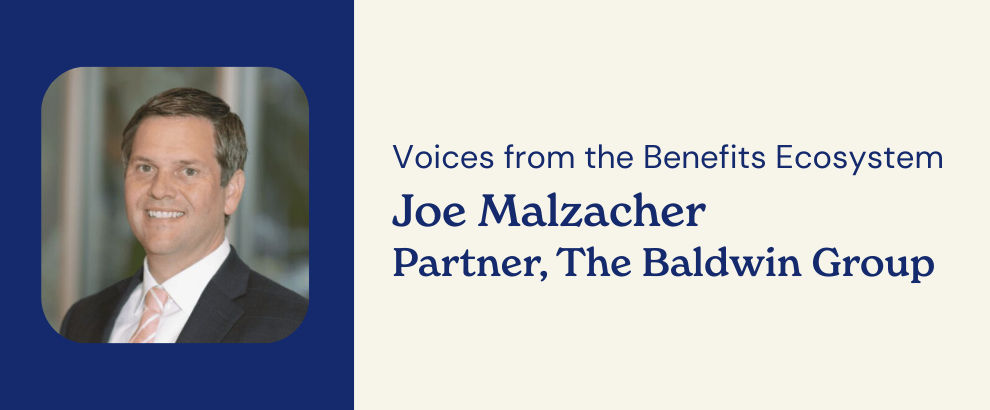
"Early in my benefits career, I learned a guiding principle that's shaped how I evaluate every wellness program: 'Wellness shouldn't feel like something you do to people — it should feel like something you do for them.' And let's be honest, the traditional biometric screening model — needles, appointments, long lines, schedule disruptions — is the definition of something being done to employees. Participation rates barely crack 10–12% in most programs, not because people don't care about their health, but because the process is clunky, inconvenient, and inaccessible.
Hibiscus Health flips that entire experience on their head. Their app uses a 30‑second facial scan to flag risk indicators for multiple metabolic markers — blood pressure, cholesterol, A1C, triglycerides, and more — with no blood draw, no special hardware, and no time away from work. Employees can do it from their couch, at whatever time works for them, and the results flag cardiometabolic risk for follow-up.
That's not just screening — that's empowerment. It's wellness done for people: simple, accessible, fast, and paired with real coaching and ongoing support. And when care gets that easy, people actually engage — which is where prevention finally starts to work."
— Joe Malzacher, Partner, The Baldwin Group
User Story
Meet Tim, 47
Tim is a 47-year-old field sales representative who recently started a GLP-1 medication to support weight loss. While the medication helps reduce appetite, Tim knows that nutrition quality matters more than ever when calories are limited.
Working with a Hibiscus Registered Dietitian, Tim is building a nutrient-dense eating plan while consuming approximately 1,000 calories per day. As he puts it, he cannot afford to waste calories on the wrong foods.
"I can't afford to waste calories on the wrong foods. My Hibiscus RD helps me make every bite count."
Tim's story reflects a broader shift employers are navigating. As GLP-1 use increases, success depends on pairing medication with nutrition guidance and accountability. Human support helps turn appetite suppression into sustainable health outcomes.
About Hibiscus Health: Hibiscus Health is a preventive health technology company focused on early cardiometabolic risk detection through AI-powered screening and registered dietitian support. The company's Healthy Selfie™ platform helps employers reduce long-term healthcare costs while improving employee wellbeing through scalable, accessible prevention solutions. Learn more at hibiscushealth.com.